
Showing posts with label transport. Show all posts
Showing posts with label transport. Show all posts
Monday, February 10, 2014
Saturday, February 8, 2014
Wednesday, July 10, 2013

Saturday, May 25, 2013
the divider dilemma

You either pick a left, or a right and in this case, the driver thought of stopping right there for a a good minute or two. It could be that the driver is on an alien world and could not find the destination.
Thursday, April 11, 2013
E4U

Related Article
Link: Hyundai debuts E4U urban mobility vehicle in Seoul. (Mother Nature Network)
Would you buy one? For one it reminds me of Bumblebee from the Hasbro toy robots
Thursday, November 15, 2012
Tuesday, November 6, 2012
Thursday, November 1, 2012
Something Holloween
Marcus Lamm, 21, tried to pass over the train tracks despite the lights flashing and the gates closing in Manningtree, Essex.
Saturday, July 21, 2012
horrible attitude
I got onto a bus a few days ago. It was a bus full of passengers
"Can you move back a little bit, pity those who are still trying to get into onto the bus?", I asked.
And what came next, really pissed me off inside.
"Why should I do that? Why should I pity?
At the end the idiot woman had to moved to the back of the bus. What a douche.
"Can you move back a little bit, pity those who are still trying to get into onto the bus?", I asked.
And what came next, really pissed me off inside.
"Why should I do that? Why should I pity?
At the end the idiot woman had to moved to the back of the bus. What a douche.
Sunday, February 26, 2012
bulldozing through traffic
the driver must be cocky, insane or a risk taker. Wouldn't want to imagine what will happen if the bulldozer's blade scratches the car?
Saturday, February 25, 2012
the jam out of no where
My sister and I was in the car heading toward a church meeting I had to attend to at 2pm. There was a weird feeling that traffic was extra heavy this afternoon. It was about 1.30 pm that time when we were stucked. We took a hard look around and to our amazement, the traffic jam was everywhere?
We were contemplating to take a different route to divert ourselves from the jam. It was futile. The jam got a whole on us.


We were contemplating to take a different route to divert ourselves from the jam. It was futile. The jam got a whole on us.
I found out later that this was the problem:
they blardy close the road for the Le Tour De Malacca cyclist to get by at the expense of the road users.
*pictures courtesy of Yee Shean Tai*
Visit her blog at:
Monday, January 30, 2012
hiriko the folding car
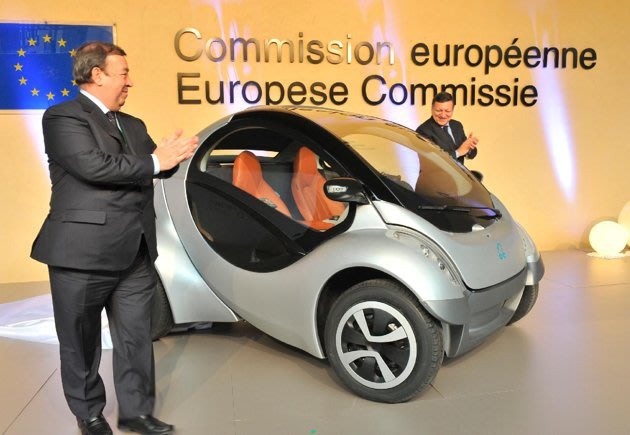
(AFP Photo/Georges Gobet)
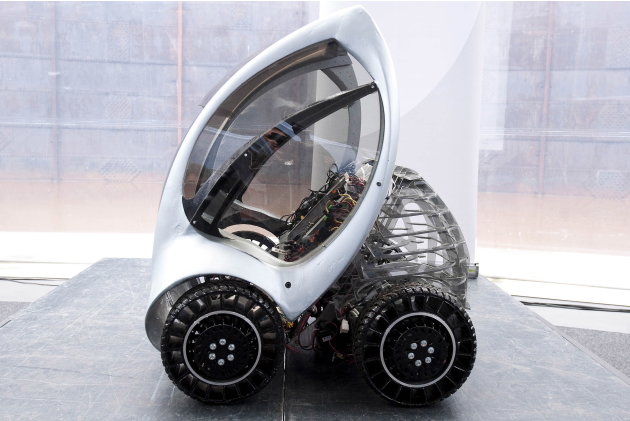
(AFP Photo/Timur Emek)
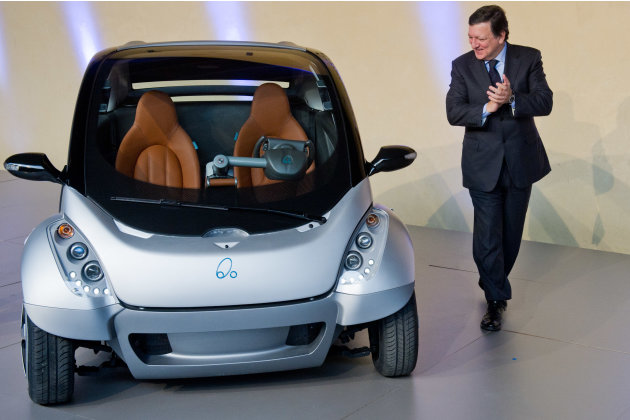
(Photo by Geert Vanden Wijngaert/Getty Images)

(Photo by Geert Vanden Wijngaert/Getty Images)
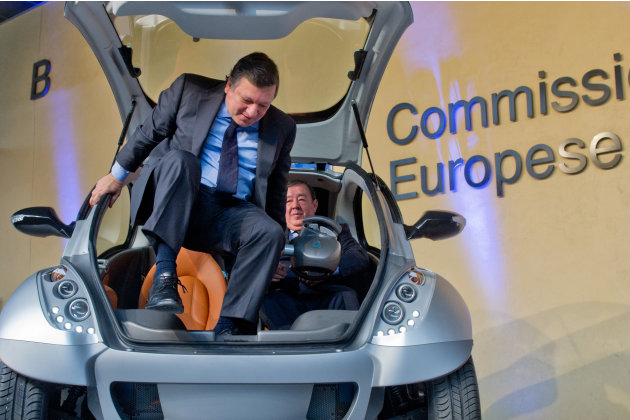
(Photo by Geert Vanden Wijngaert/Getty Images)
Related article:
Saturday, January 28, 2012
Friday, December 23, 2011

Sunday, June 12, 2011
3 way street
Okay that is seriously scary!!!! I have goosebumps on my back...
Related article
3 Way Street: Artist video tracks scary traffic (The Upshot. Yahoo news)
Wednesday, May 25, 2011
stalking the car


Managed to stalk a car at the streets, weeks ago. Looks so Bumblebee-ish? Can anyone tell me what type of car is that?
Wednesday, March 31, 2010
lose/gain weight now?

saw this passing by the car that I was in. Take note from this car, if you want to do advertisement on a car, used neon colors to attract people, and please when getting in shape please exercise and find legitimate ways to lose the weight
Tuesday, December 1, 2009
Don't die because of your drunkenness
I can't imagine her being dead because of her drunkenness.
This is a good example on why you should call
a taxi to get home
This is a good example on why you should call
a taxi to get home
instead of the train.
Wednesday, May 27, 2009
Best ways to keep your car running
1. Don't Drive
Want your car to last? Don't use it. That sounds obvious, but it's worth keeping in mind.
Chances are there are plenty of times when you currently use your car that you could be walking, biking, using public transportation or carpooling — choices that are better for the environment, your wallet, your health, and the car you won't be driving. It's simple: The less you drive, the longer your car will last.
2. Make Fewer Short Trips
Short trips of less than 10 minutes can be particularly hard on a car, resulting in excessive wear and tear. During a short trip, your car's engine never has a chance to reach its full operating temperature.
So what? Here's why it matters: One of the byproducts of engine combustion is water. When an engine reaches its operating temperature that water turns to vapor and is expunged, either out the tailpipe or the crankcase ventilation system. On a short trip, however, that water stays inside your car's engine and exhaust. Unfortunately, water is one of only three ingredients necessary to make rust (you've already got the other two, oxygen and metal), and rust kills. Look at any of my brother's cars.
A further complication of condensation and water is that it dilutes your oil, which then does a poorer job of lubricating the engine. If you can't avoid taking lots of short trips, we recommend you change your oil frequently, such as every 2,000-3,000 miles.
3. When Shopping for a New Car, Choose Carefully
If you're in the market for a new car — and you'd like that car to last until the start of the Sasha Obama administration — be sure to choose a car company that's going to be around for a while, with a good reputation for supplying parts.
Here's a sad but true fact: Too many perfectly good-running cars are junked because it's hard to get parts for them. So here's our recommendation: Talk to your local independent mechanic and find a company that has a good reputation for supplying parts for its older vehicles. Our personal favorites are Volvo, Toyota and Saab (although everything is subject to change these days). These brands have a reputation for longevity, so it's understandable that they'd want to make sure they make parts available for many years.
4. Drive Gently
When you drive, do your car a favor and drive gently.
Think of your car like your own body. What's more likely to land you in a full-body cast: A gentle walk around the park, or a season of rugby? We rest our case.
What does "drive gently" mean? It means accelerating slowly, not snapping your head back. It means anticipating your braking so you can brake gently and avoid panic stops. It means not revving your engine in the driveway when it's cold, before the oil is warm and freely circulating.
If it's below freezing outside, allow your car a minute or so to warm up before driving it hard. Then drive slowly for another minute or two, until the engine oil has warmed up and started to fully lubricate all the components.
Finally, if your car is new, follow the break-in recommendations in your owner's manual. Regardless of the manufacturer's recommendation, we advise changing your car's oil after your inaugural 1,000 miles.
5. Watch for Engine Warning Signs
It's OK to drive your car short distances with certain warning lights illuminated or gauges out of their normal range, but there are three that you dismiss at your car's peril: the engine oil light, the engine temperature gauge and the brake light. A few minutes of an excessively hot engine or low oil pressure and the groceries you're hauling in the back could suddenly be worth more than your car. A couple of minutes with the brake light on and you might end up playing bumper cars with theCadillac Escalade ahead of you. The one being driven by Tony Soprano. In a bad mood.
Get in the habit of glancing at your engine's temperature gauge and warning lights. If the idiot lights come on, pull over as soon as it's safe to do so and shut off the engine. You might just save yourself an expensive engine rebuild — much to the disappointment of your mechanic.
6. Unload Extra Weight
Most of us know what it feels like to be hauling a few extra doughnuts around the midriff, so to speak. It places extra demands on our engine, and it creates suspension, braking and even exhaust problems. If you catch our drift.
It's no different with your car. Extra weight adds stress to critical systems and causes premature wear. Check your car right now. What's in there that can come out? Toss out the four bowling balls, the barbells and the lead-lined box of plutonium fuel rods. You might even consider removing your mother-in-law — as long as she doesn't have to come inside the house, that is.
You should also remove anything that causes additional drag. Creating aerodynamic drag is similar to adding weight in that it increases the demand on your engine, so think about removing the big, flat bug shield that sticks up above your hood. Remove any roof racks you're not actively using, and take the cargo carrier off the top of the minivan. We know it gives you some hope of looking cool, like you do something besides haul kids around, but it's killing your gas mileage and making your engine work harder.
7. Do Your Regular Maintenance
Skipping regularly scheduled maintenance intervals is one of the quickest ways to assure your car finds its way to an early grave. Regular oil changes and oil, fuel and air filter changes all help make sure your car has what it needs to run without problems: clean air and clean fuel, plus fresh, uncontaminated oil to prevent wear and tear.
An added bonus to regular service? It gives good mechanics an opportunity to spot problems before they balloon into something more serious.
If you're wondering how often to do these things, there's a book that explains it all to you. It's called the owner's manual. You'll find it in your glove box, shrink-wrapped in plastic, because — if you're like most of us — you've probably never looked at it. In the back you'll find a list of service intervals, and the services that are recommended during each of them. If intervals in the book stop at 120,000 miles, that doesn't mean you're done with maintenance. Go back to the beginning and start over (so, for instance, do all the services called for in the 7,500-mile service at 127,500). Nice try, though.
By the way, if you're fretting over the ongoing cost of routine service, remember our maxim: "It's the stingy man who makes the most boat payments!"
8. Change Oil and Other Vital Fluids
Your car's fluids will often be changed during regular service intervals, but it's important enough that we wanted to mention it separately. As you drive your car, and even if it just sits in the driveway, your car's fluids degrade.
That's a problem because each of the fluids in your car is vital to the long-term health of the engine, transmission, steering or brakes. Simply keeping the fluids topped off isn't enough because over time they lose important properties — like their ability to remove heat and lubricate, as well as the ability to prevent rust and freezing.
What fluids are we talking about? Transmission, differential, brake and power-steering fluid; oil; and antifreeze. Windshield washer fluid? Not so important.
Regular transmission and differential fluid changes are often overlooked, but this service is very important. If you really want to keep your car forever, our suggestion is to get these fluids changed every 60,000 miles whether your owner's manual recommends it or not. Fresh, clean transmission fluid assures that your car's drivetrain stays cool and uncontaminated. Some cars, by the way, have two separate differentials. Be sure to ask your mechanic if yours is one, and make sure that both sets of differential oil get changed. It's easy to overlook this particular service, but you do so at your own peril: A cooked differential can cost thousands of dollars to repair. Routine maintenance service is much less expensive; it should cost about $150 to get your transmission fluid flushed and replaced, and another $100 to do both differentials.
By the way, if your mechanic tries to sell you new blinker fluid, lace up your Pro-Keds and run out of there as fast as you can.
9. Get Problems Checked Out Sooner Rather Than Later
This is like saying "Don't let a cold turn into pneumonia." If you have a small problem with your car, get it checked out sooner rather than later.
For example, a torn CV boot is a common problem and a simple repair. Delay getting it fixed, though, and you'll eventually end up by the side of the road, unable to drive and forced to fork over some additional money for a tow and a whole new axle.
That's just one example. There are many other problems that start small but balloon into something much larger if they're not addressed right away. Don't believe in this theory? Talk to the secretary of the Treasury Department.
Above all, make sure your car is safe to drive. If you have any doubts about such things as brakes, brake lines, ball joints, tie rods, airbags, seat belts or even the structural integrity of your car, get it checked out. Remember: Even though you want your car to last a long time, you still want to outlive your car.
10. Find a Mechanic You Trust
Find a mechanic you trust intuitively. Think of maintaining your car as a partnership between you and your mechanic. Or, more precisely, between your bank account and the bank holding the loan on your mechanic's yacht. Money only moves in one direction, and in exchange you get a car that runs reliably.
Having a good working relationship with your mechanic will enable you to make wise decisions when the time comes — and you won't have nagging doubts about the truthfulness of what you're being told. This is such an important point we wrote an entire feature on how to develop a great relationship with your mechanic. All platonic, mind you.
How do you find a great mechanic? When you find someone you think you like, ask for recommendations from longtime customers. If you're new to an area, or your mechanic just retired to the Home for Aged Grease Monkeys, ask friends or try searching our database of recommended mechanics, the Mechanics Files.
More automobiles tips and advice go to: Autos.yahoo.com
Thursday, March 26, 2009
tata nano

Prices:
RM8,700++(120,000++ rupees) to RM13,000++ (180,000++ rupees)
Comes in three models:
-Basic: no radio, no power steering, no power windows, no aircond.
-Deluxe: has aircond, power steering, power windows, central locking.
-Luxury: has aircond, power steering, power windows, anti-lock braking system.
The cost reduction methods were:
-The Nano’s boot does not open, instead the rear seats can be folded down to access the boot space.
-It has a single windscreen wiper instead of the usual pair.
-Some exterior parts of it are glued together, rather than welded.
I thought proton cars are worst in terms of quality, but guess I am wrong then
More info on the world most cheapest car, go to: Tatamotors
Subscribe to:
Posts (Atom)
